
Whitetail tactics sharpened by biology and battle-tested grit
Biologist on Bucks delivers whitetail deer hunting strategy built on real wildlife biology and 30 years of hands-on experience in the Southern deer woods. Founded by a U.S. Navy veteran and professional wildlife biologist, this site covers everything from whitetail behavior and deer sign interpretation to habitat management, food plot science, shed hunting strategy, and seasonal hunting tactics — all grounded in actual field biology, not campfire guesswork or recycled internet advice. Whether you're trying to pattern a mature buck, improve your hunting property, or finally understand why deer do what they do, you'll find science-based answers here that most hunting content never gets close to. Tactics sharpened by biology. Results forged by grit. Hooyah.
Allen
5/8/20247 min read
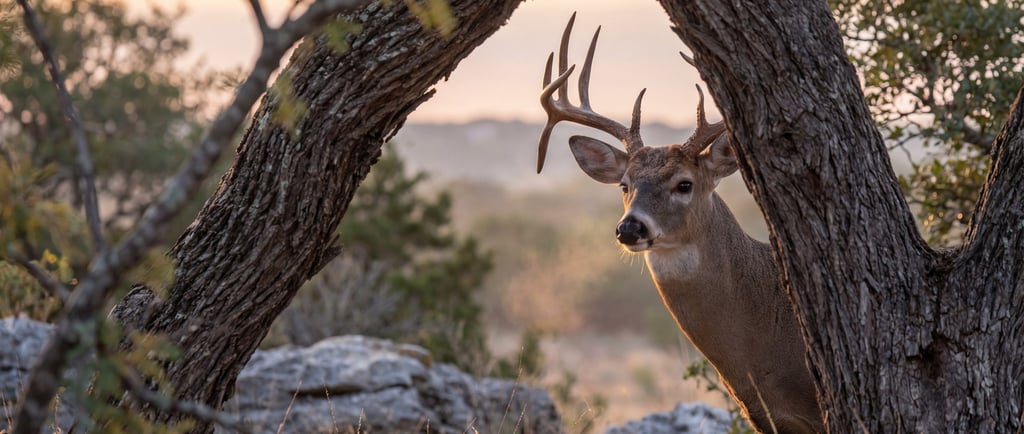
Understanding a buck’s behavior is one of the most important skills a hunter can develop, yet it’s often misunderstood or oversimplified. Many hunters focus heavily on gear, trail cameras, and stand locations, but struggle to consistently see mature bucks during daylight. The difference between frustration and success usually comes down to one thing: understanding how bucks think and why they move the way they do. Or buying a deer feeder if you're in Texas or another state where baiting is legal. Just kidding… you really do need to know how bucks think and why they move.
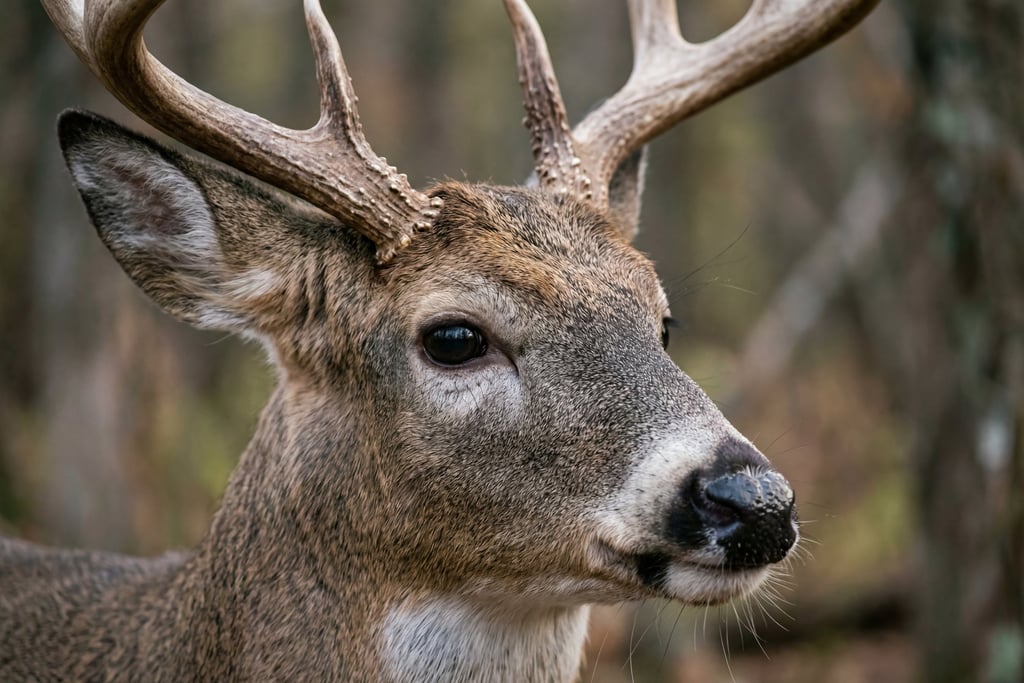
Every move has a purpose—unlike Marines deciding whether to eat the red or blue crayon today.
Bucks—and does, for that matter—are not random animals wandering the woods. Every movement they make is driven by survival, instinct, and experience. Mature bucks in particular behave very differently from young deer, and they react quickly to pressure, mistakes, and changes in their environment. When hunters fail to understand this, they often hunt great-looking spots at the wrong time or under the wrong conditions.
This article breaks down deer behavior in a practical way, focusing on how bucks think, how they move throughout the year, and how you can use that knowledge to make better hunting decisions.
How Bucks Think: Survival Shapes Every Decision
A buck’s brain is wired almost entirely around survival. Unlike humans, deer don’t weigh long-term consequences or take unnecessary risks. Every movement is evaluated through instinct: Is this safe? Can I smell danger? Do I have an escape route?
Cognitive Ecology of Bucks
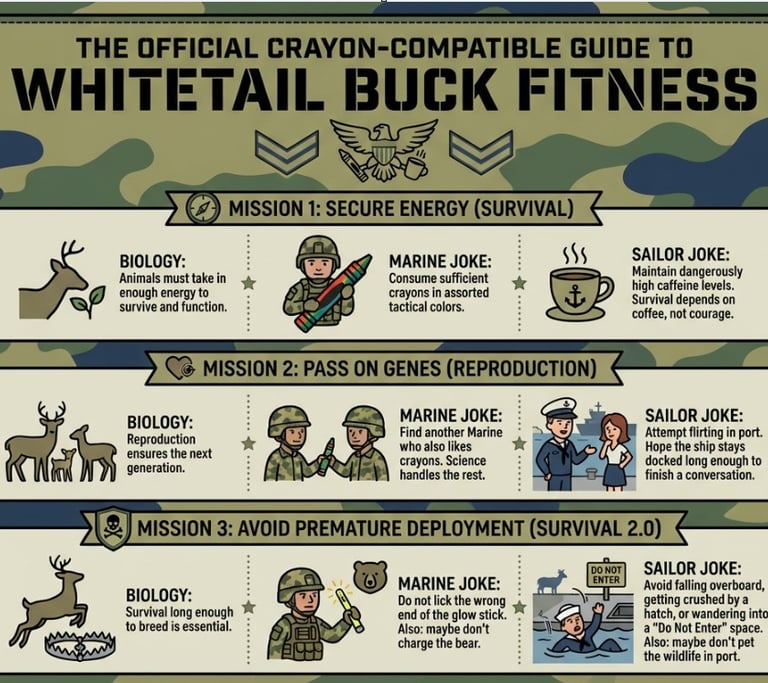
Decision making is risk‑based. A buck’s behavior is shaped by a simple cost–benefit calculus: maximize energy intake and reproductive opportunities while minimizing mortality risk.
This can be represented by a conceptual model
L= F + G+ R
L= Life
F= eat good food (nutrition and energy)
G = spread genetics (reproductive success)
R= minimize risk (survival probability)
Goal: maximize L subject to trade‑offs (investing in F or G can reduce R).
Or for my Jarhead friends we can break out the crayons with this version:
Mature bucks are especially cautious because they’ve survived multiple hunting seasons. They learn quickly from negative encounters—whether it’s hearing a strange noise, catching human scent, or being pressured near bedding or feeding areas. One bad experience is often enough to permanently change a buck’s movement pattern.
This survival-first mindset explains why mature bucks often appear “ghost-like.” They may live in a small area, but only move when conditions favor them. Wind direction, cover, and pressure all play a role. If something feels off, they simply won’t move, even if food or does are nearby.
Think of a mature buck like a seasoned Navy Chief—he’s seen enough chaos to know better, and he’s not falling for the same trick twice. Young bucks? They’re more like brand-new Marines: enthusiastic, fearless, and occasionally licking things they shouldn’t.
Why Mature Bucks Behave Differently Than Young Bucks
Young bucks are curious and often careless. They move earlier in the afternoon, travel in more open areas, and respond aggressively to calls or decoys. Mature bucks, on the other hand, are calculated. They prefer thick cover, edge habitat, and routes that allow them to smell danger before they see it.
This difference is why many hunters see big bucks on trail cameras at night but never during legal shooting light. The buck isn’t gone—he’s simply moving when he feels safest. Young bucks are basically the Marine privates of the deer world—charging into the open with confidence and zero hesitation. Mature bucks? More like Sailors who’ve been underway too long—moving slow, suspicious of everything, and checking the wind like it’s a checklist.
Understanding this distinction helps reset expectations. Killing mature bucks requires patience, discipline, and precise timing rather than constant sits and blind optimism.
Daily Buck Movement: Bedding to Feeding and Back Again
Most buck movement follows a predictable daily pattern built around bedding and feeding. Bucks spend the majority of their day bedded in areas that give them a wind advantage, visual cover, and multiple escape routes. When they move, they typically follow defined travel corridors that connect bedding to food.
The key difference between bucks and does is when they move. Does are more likely to enter feeding areas earlier, while bucks often stage in cover nearby until conditions feel right.
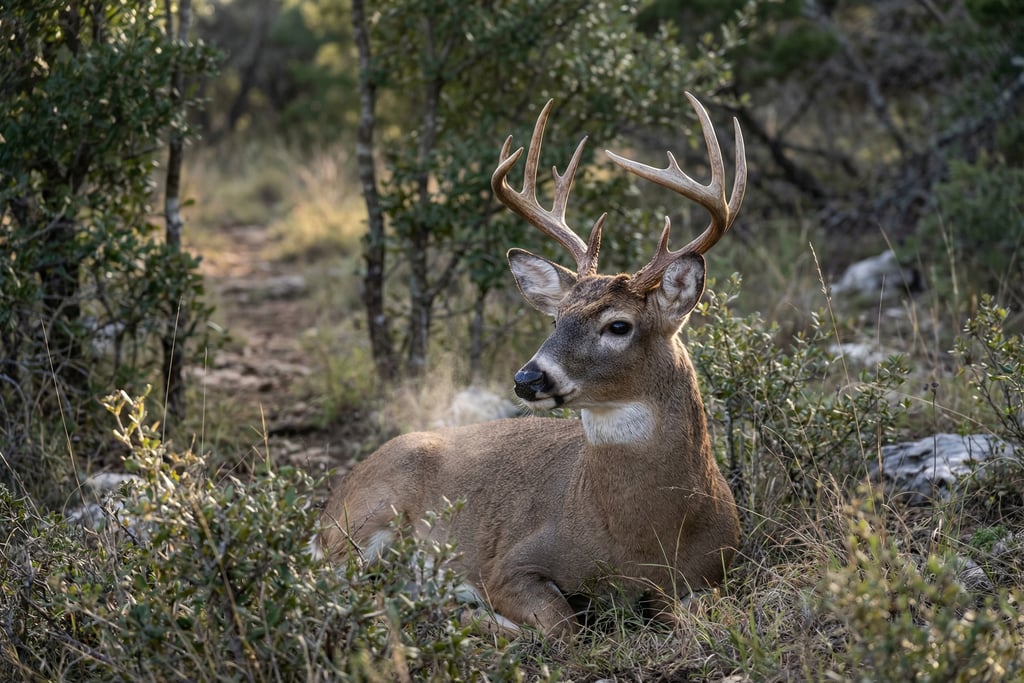
Staging area: where bucks wait for perfect conditions… and where Marines would get bored after 30 seconds.
This behavior is why many encounters with mature bucks happen just inside cover rather than out in open fields.
Seasonal Changes in Deer Behavior
Early Season Behavior
In the early season, deer behavior is heavily driven by food. Bucks focus on high-protein, easily digestible sources as they recover from summer growth and prepare for fall. Movement patterns are often consistent, and daylight activity can be good if hunting pressure is low.
However, mistakes made early—such as hunting with the wrong wind or pushing too close to bedding—can cause bucks to turn nocturnal quickly. Early season bucks are like Sailors on shore leave—food first, everything else second.
Pre-Rut Behavior
As daylight shortens, testosterone rises and buck behavior begins to shift. Feeding is still important, but social hierarchy and breeding preparation start to influence movement. Bucks begin making scrapes and rubs, expanding their range, and checking areas where does frequently travel. Movement increases, but mature bucks remain cautious.
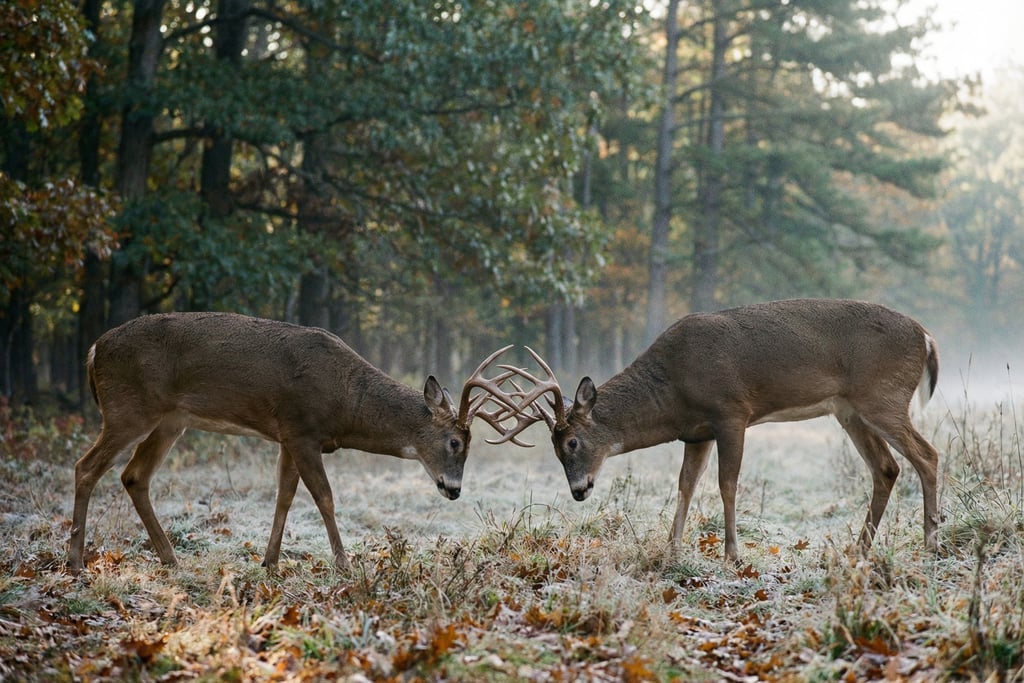
Think of pre-rut bucks like Marines getting ready for inspection—suddenly everything is about dominance, posture, and showing off.
Rut Behavior
During the rut, buck behavior becomes less predictable but more aggressive. The primary focus shifts to breeding, and bucks are willing to take risks they normally wouldn’t. Despite this, mature bucks still use terrain and wind intelligently—but even the smartest, oldest bucks have blind spots during this window. The rut is the one time of year when even the oldest, smartest bucks act like a barracks full of Marines on a Friday night—everybody’s fired up, nobody’s thinking straight, and a hunter finally has a real chance to ‘score.’
Mistakes Mature Bucks Make During the Rut (That They Rarely Make Any Other Time)
Even the most calculated, ghost‑like bucks slip up during the rut because their priorities shift from survival to reproduction. This creates a handful of predictable mistakes:
• They move during daylight when they normally wouldn’t. A buck that’s strictly nocturnal in October may suddenly be on his feet at 10 a.m. in November because a hot doe pulled him out of his pattern.
• They travel in the open instead of staying in cover. Mature bucks typically hug edges, ditches, and thick cover. During the rut, they’ll cross open fields, logging roads, and pastures simply because they’re locked onto a doe or searching for one.
• They ignore their usual wind discipline.Outside the rut, a mature buck almost never travels without the wind in his favor. During the rut, he may cut across the wind or even move with it at his back if he’s trailing a doe or chasing a rival.
• They revisit areas they normally avoid. Places that have been “dead” all season—like field edges, open hardwoods, or pressured travel routes—can suddenly light up because bucks are checking doe groups, not prioritizing safety.
• They respond to calls they’d normally ignore. A mature buck that would never fall for a grunt or rattling sequence in early season may charge in during the rut, especially if he thinks another buck is tending a doe nearby.
• They travel farther outside their home range. A buck that usually lives in a tight 200–300‑acre core area may roam a mile or more during peak rut. This exposes him to hunters who never had him on camera.
• They make visual mistakes. Tunnel vision is real. A rutting buck may lock onto a doe so intensely that he fails to notice movement, silhouettes, or even a hunter drawing a bow 20 yards away.
• They break their own timing patterns.
Mature bucks are creatures of habit—except during the rut. They may show up at odd hours, revisit scrapes at midday, or cruise ridges during late morning when they’d normally be bedded.
Why These Mistakes Happen
All of these errors stem from one biological reality: During the rut, breeding success outweighs survival instinct. A buck’s testosterone spikes, his focus narrows, and his decision-making becomes reactive rather than calculated. He’s still using his senses—but he’s using them while distracted, amped up, and driven by instinct rather than caution.
This is why the rut is the great equalizer. The same buck that outsmarts hunters for five straight seasons can make one bad decision in November and walk right into a shooting lane.
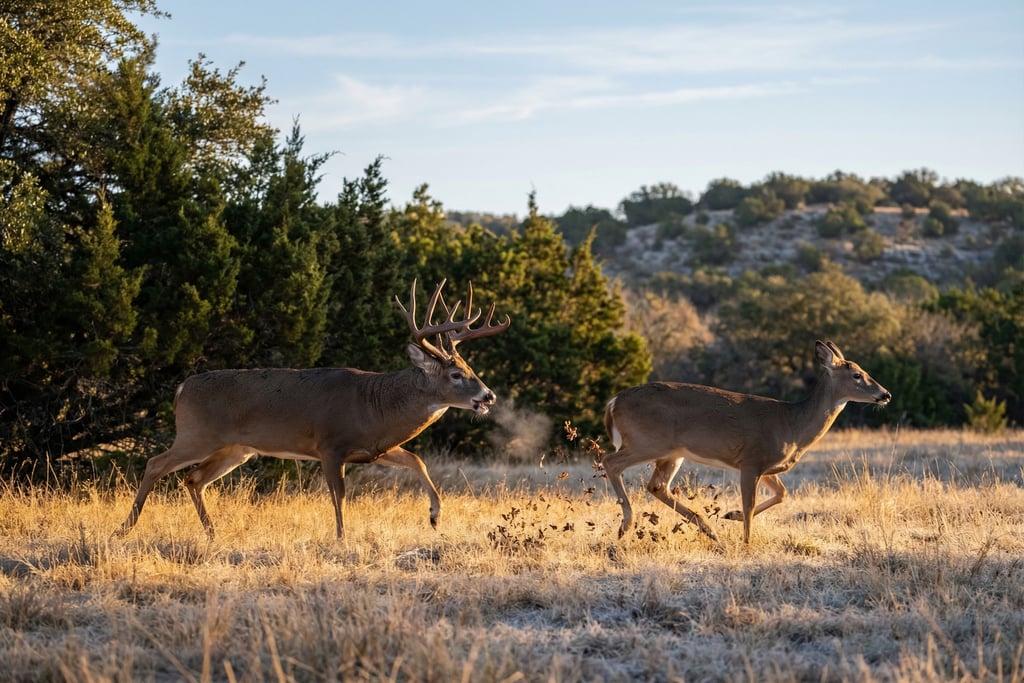
Rut mode: when even the smartest bucks start making Marine-level decisions.
Post-Rut and Late Season Behavior
After the rut, bucks are physically depleted. Movement decreases significantly, and survival becomes the top priority again. During this phase, bucks focus on high-calorie food sources and secure bedding areas.
Cold weather amplifies this behavior.
How Hunting Pressure Alters Buck Behavior
Hunting pressure is one of the strongest forces shaping deer behavior. Even moderate pressure can dramatically reduce daylight movement. Bucks under pressure act like Sailors hearing “all hands on deck”—they disappear faster than you can blink.
Successful hunters manage pressure by limiting sits, rotating locations, and hunting only under optimal conditions.
Wind and Terrain: A Buck’s Defensive System
Bucks rely heavily on wind and terrain to stay alive. They often bed in locations where the wind covers their back while their eyes watch downhill or into open areas. Ignoring wind is one of the fastest ways to educate a buck. If Marines used the wind as well as bucks do, they’d never get caught sneaking extra chow hall desserts.
Applying Deer Behavior to Better Hunting Decisions
Understanding deer behavior allows hunters to stop guessing and start making informed decisions. When stand placement, timing, wind direction, and seasonal behavior align, opportunities naturally follow.
Contact
Questions? Tactical tips? Reach out anytime.
hello@biologistonbucks.com
© 2025. All rights reserved.
Attention on Deck — Image Disclaimer
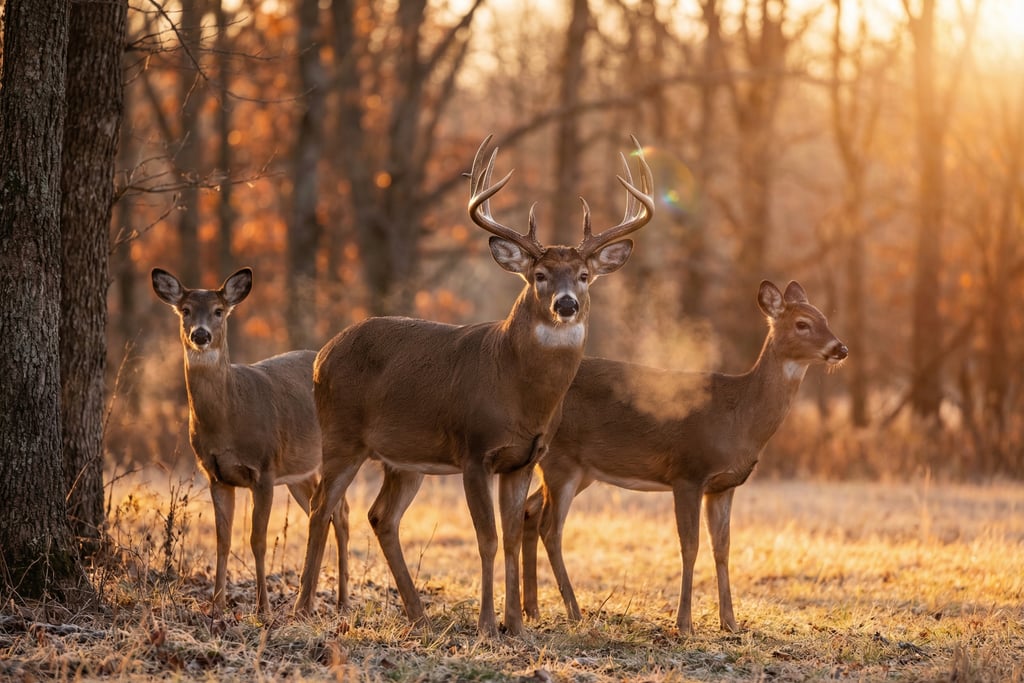
The deer images on this site are a mix of AI-generated imagery and real photos taken by me personally in the field and deer woods of the Southern United States. I'm a wildlife biologist and a hunter, not a photographer. Much like the Navy taught me, you use the best available asset for the mission. A camera and a whitetail buck operate on completely different schedules, and unlike the Marines, I'm smart enough not to fight a battle I can't win.
When you see a photo tagged "Field Image" — that one's the real deal, straight from the woods. The rest are AI-generated and proud of it. Either way, the science is real, the strategies are real, and the deer in every photo represent exactly what we're all out there chasing every fall.
Hooyah. Carry on.